
Preparations when travelling with your dog
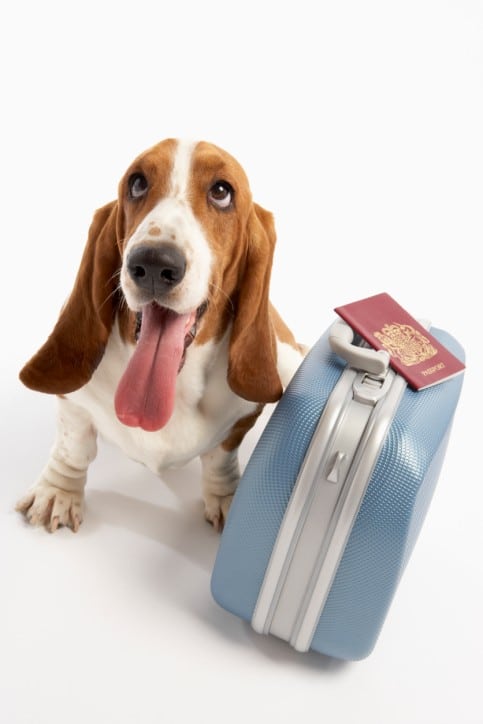
When making preparations to go on holiday with your dog, you will notice that children and dogs have a lot in common. Both would prefer to leave right now with no ifs and buts, both are often unable to tolerate long car journeys and both are prone to mood swings.
Even if your pooch is waiting for you with his lead in his mouth, so to speak, and can hardly wait to embark on the journey, make sure you take enough time to make all the necessary preparations in peace!
Vaccinations.
Your vet will inform you which vaccinations are necessary in your holiday region. You will find basic vaccination guidelines here.
Pet passport.
Your dog may enter the majority of EU states via a pet passport. However, some countries require additional proof of immunity and vaccination. Consult your vet in good time!
Health.
You know your dog’s health best. Ensure that your dog is in good health. In case of doubt, take your dog to the vet for a check-up to be on the safe side. Remember to worm and de-flea your dog and ensure that its rabies vaccination is up to date. Proof of antibodies may be required in certain countries, which requires long-term advance planning. You will find additional information on the topic of health here.
Health certificate.
Some countries pose health risks, and require proof of a health certificate for your dog. The following applies here, too: other countries – other customs…
Proof of identity.
It is always important to be able to “identify” your dog. Microchips, dog tags and tattoo numbers are helpful here.
Refreshments.
You must make various preparations for your journey depending on season and destination. In summer, for example, your dog will require a great deal of fresh water, and should receive this on a regular basis. Plan in a break around every two hours so that your dog can stretch its legs and relieve itself. You’ll benefit from this too.
Safety.
If you’re taking the car, ensure that you and your dog travel safely. A dog jumping around in the car can quickly result in accidents. Help your dog to get used to traveling in a car, and, if necessary, in a transport box.
Travel sickness.
Some dogs suffer from terrible nausea when traveling in a car. There are ways of relieving the dog’s discomfort. Simply ask your vet.